SERIES 4 — DISCOVERING THE SMOKY MOUNTAINS
Follow the Series 4 story one book at a time. Across eight books, the team travels through the Southeast and Appalachia, meeting new people, exploring new places, responding to searches and difficult human problems, and learning how lasting service depends on community knowledge, organization, and trust.
Readable editions remain in editorial preparation. Audio editions are planned as part of the developing multi-voice Adventure Universe experience and are not yet available for purchase.
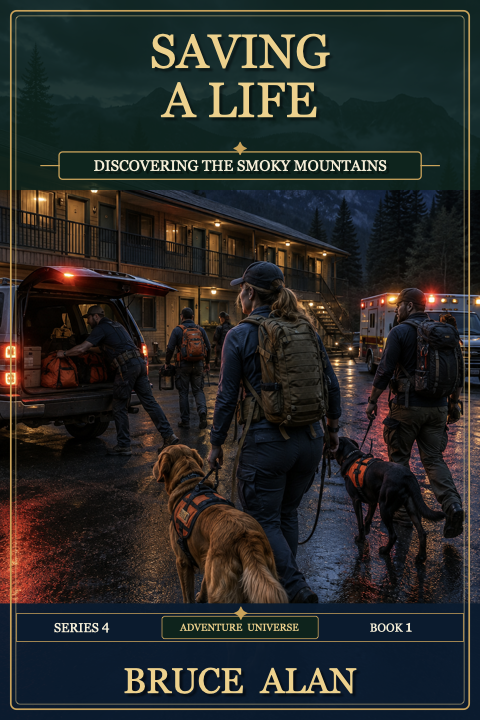
BOOK 1
The next journey begins with new friends and a route through the Southeast that mixes wildlife, science, travel, public service, and personal loss. The characters move quickly between wonder and responsibility, discovering again that an interesting place can become connected to a much more serious story without warning.
Returning home does not erase what they have seen. New relationships and new questions travel with them, setting up a series in which the group will need to understand not only terrain and tasks, but also the people and communities around them.
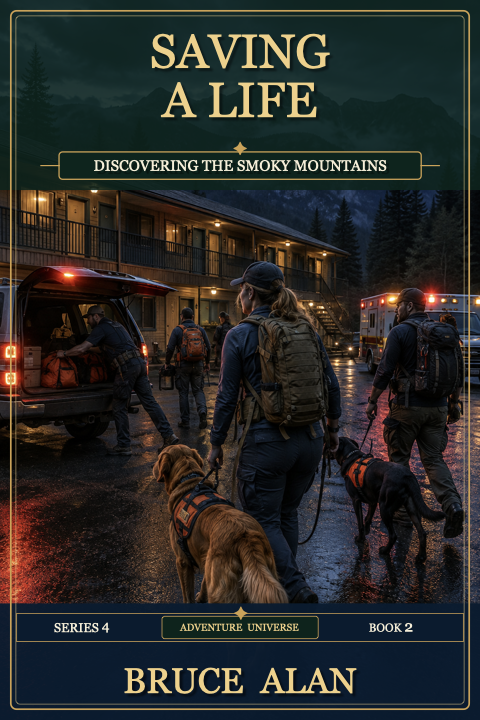
BOOK 2
A search brings the team into contact with people whose fear and past experiences complicate the simple idea of “being rescued.” The characters learn that someone in danger may not immediately trust strangers, uniforms, dogs, or institutions—even when those people are trying to help.
The road then carries the group through Georgia, the Carolinas, Asheville, and the Appalachian corridor, where history, architecture, culture, and local voices begin reshaping how the team understands the region.

BOOK 3
Biltmore, Cherokee, wildlife, horses, and mountain communities broaden the journey while two new additions deepen the Adventure Universe network. Learning becomes increasingly local: the characters depend on people who know the land, history, community, and institutions better than they do.
A missing-person case raises the stakes. Search teams, families, community members, and professionals must separate tasks and combine information, reinforcing the idea that difficult problems become manageable only when responsibility is organized rather than concentrated in one person.

BOOK 4
The search story widens into questions of victimization, trust, accountability, and how communities respond when someone has been harmed. Young people help by noticing, communicating, connecting witnesses, and supporting others, while investigative and enforcement work remains with trained adults.
After the immediate crisis, attention turns toward standards, communication, and connection. The team begins thinking more deliberately about how useful programs can be repeated and how communities can stay connected without losing their own identity or authority

BOOK 5
Travel gives way to a broad exploration of universities, culture, architecture, geology, hospitality, food, and the many careers hidden behind places people normally experience only as visitors. The characters keep discovering that expertise can look very different depending on the problem being solved.
When they return toward ordinary life, the adventure does not simply stop. What they have learned changes what they notice at home, and familiar neighborhoods become part of the same expanding world of service, risk, work, and opportunity.
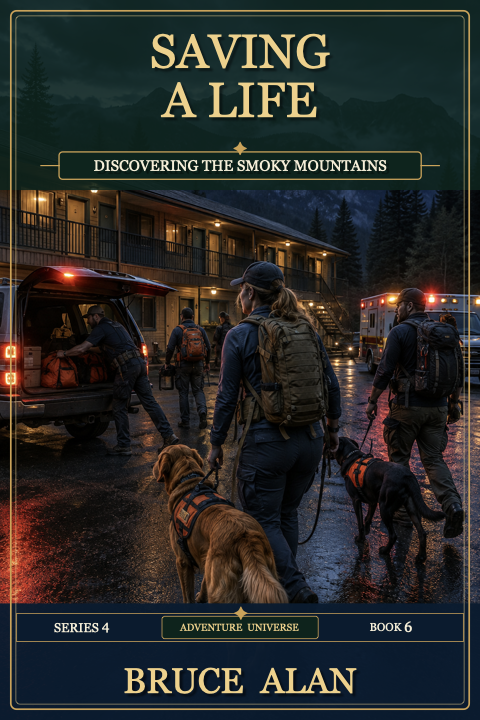
BOOK 6
Science, history, education, and the Naval Academy continue widening the characters’ sense of possible futures. Dense subjects become less intimidating when broken into manageable pieces, and the group learns that not understanding everything immediately does not prevent curiosity from becoming competence.
This part of the story also strengthens the link between learning and practical organization. Knowledge matters most when people can apply it, explain it, and connect it to the next useful decision.

BOOK 7
The team begins turning ideas into repeatable programs. Project planning, schedules, milestones, transportation, mentors, institutions, and community partners reveal that even an excellent idea can fail when one necessary piece has been overlooked.
Those setbacks become lessons rather than reasons to quit. The characters learn to revise plans, ask who is missing, and build systems that allow other people to contribute rather than making every success depend on the original team.

BOOK 8
The final part of Series 4 brings together outdoor experience, wildlife, careers, relationships, search, and the growing question of where each person belongs next. New opportunities begin pulling characters toward different places and different kinds of responsibility.
The series closes with a larger principle: visible success belongs to the whole network that made it possible. The Adventure Universe is becoming something that can travel, adapt, and grow through regional leaders—setting the stage for the more demanding leadership challenges ahead.