Series 5 - Becoming Leaders
Follow the Series 5 story one book at a time. Across fifteen books, familiar skills and relationships grow into leadership, organization, historical inquiry, international cooperation, and a humanitarian network that must make difficult decisions without pretending any one person has the whole answer.
Readable editions remain in editorial preparation. Audio editions are planned as part of the developing multi-voice Adventure Universe experience and are not yet available for purchase.
BOOK 1
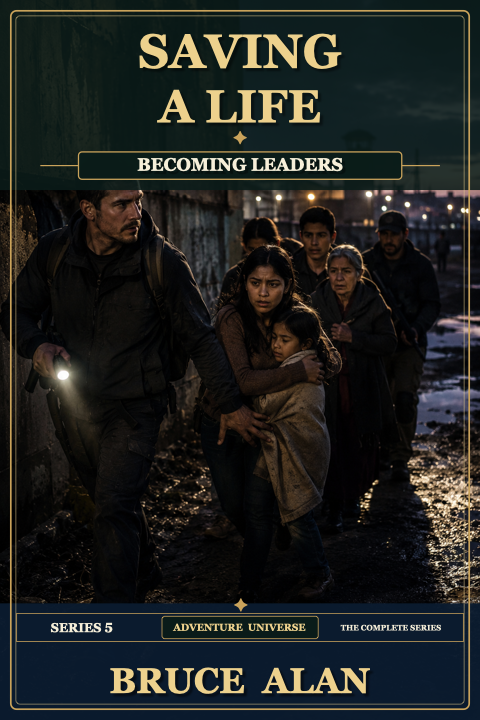
A search in the mountains brings JJ and Janet back into the world of aviation, search teams, local volunteers, and people whose lives do not fit simple assumptions. An older man at the center of the search has his own knowledge and motives, reminding the team that professional descriptions and a person’s lived reality can look very different.
The experience introduces new mentors and histories while keeping the young characters grounded in family and school. Leadership begins here as the ability to listen, work within a larger system, and recognize when someone else understands the problem better than you do.
BOOK 2
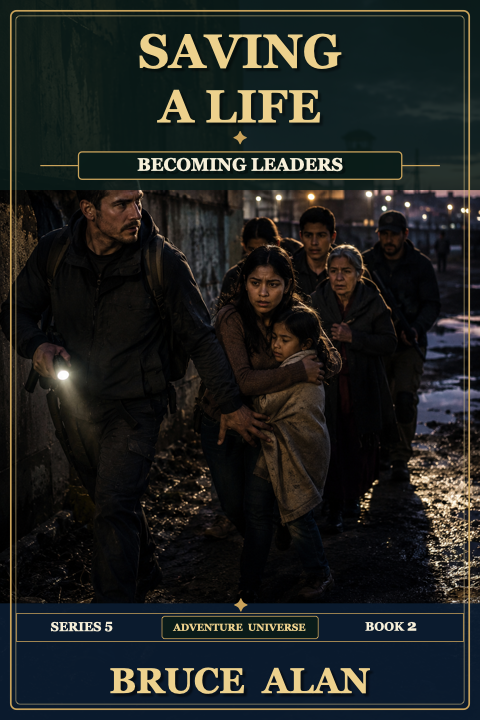
Holiday events, public spaces, police and K-9 demonstrations, and a widening professional network turn ordinary outings into opportunities to learn how different forms of service fit together. Recognition comes to JJ and KC, but the more meaningful reward is access to people willing to teach.
The story keeps public praise in perspective. The visible person at the center of a ceremony is only one part of a much larger chain of family, schools, responders, trainers, mentors, and partners who made the result possible.
BOOK 3
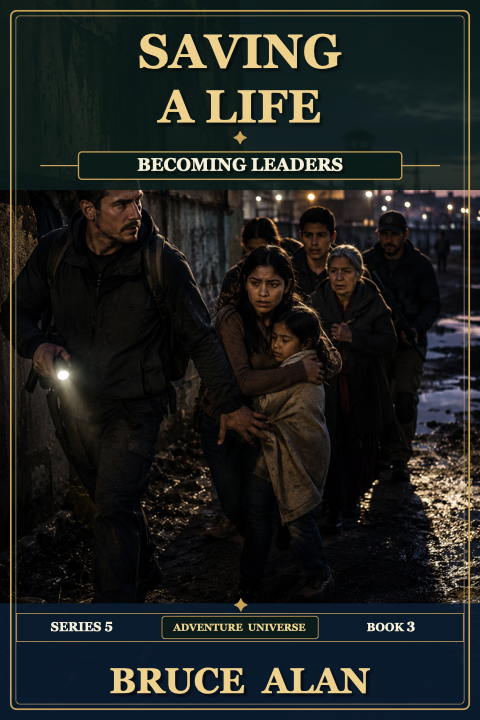
Family life, school, technology, and community celebration return the story to everyday adolescence even as difficult social and historical questions begin pressing in. The characters learn to separate curiosity from certainty and to accept that some problems cannot be solved simply by working harder.
Peer teaching becomes more important. Knowledge is no longer flowing only from adults to young people; members of the group begin teaching one another and discovering that leadership can spread horizontally through a team.
BOOK 4
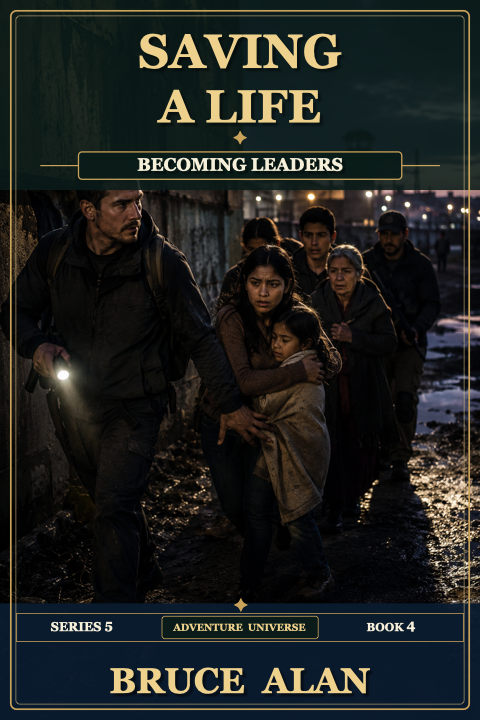
Observation of suspected criminal activity and exposure to law-enforcement training create a sharper lesson about boundaries. The young characters can notice, report, learn, and ask questions, but capability does not give them unlimited authority to act.
Career interests broaden at the same time. Police work, search, training, law, public service, and other paths become subjects the group can explore without forcing anyone into a single future identity.
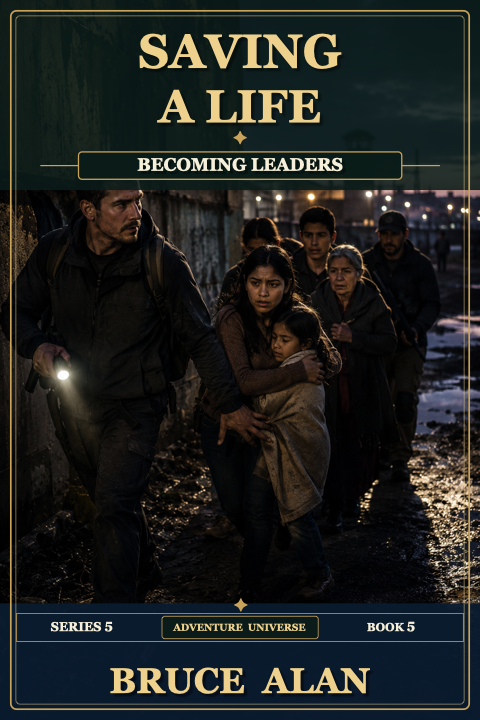
BOOK 5
Dogs, search, public service, and the principle that important results require many contributors lead directly into a much larger historical question: Argentina’s Dirty War and the people who disappeared within a regional system of repression and political violence.
The team begins asking what help could look like when a problem crosses institutions and borders. The answer starts not with one heroic actor, but with local knowledge, trusted contacts, communication, transportation, and people willing to take responsibility for one manageable part of a larger effort.
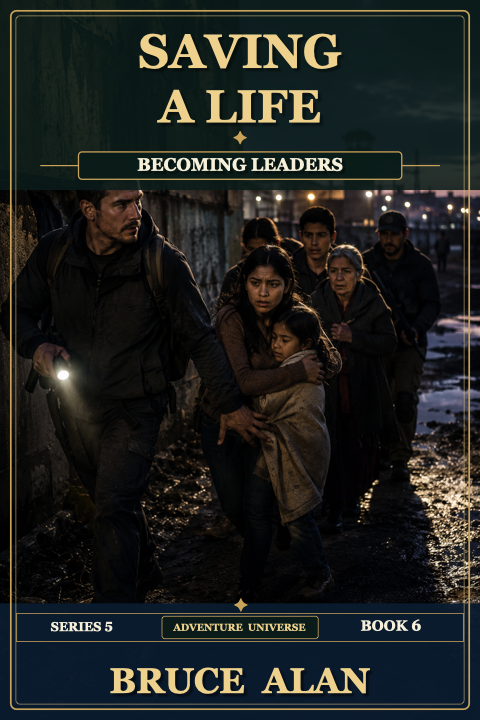
BOOK 6
Operation Condor and related regional history deepen the characters’ understanding of how policy, intelligence, violence, ideology, and unintended consequences can intersect. Different speakers bring different experiences and assumptions, making the story less about receiving one final answer than learning how to compare evidence and perspective.
The humanitarian planning continues carefully. The characters learn that concern for people in danger must be balanced with the risk of making their situation worse, and that local communities must hold real authority inside any plan meant to help them.
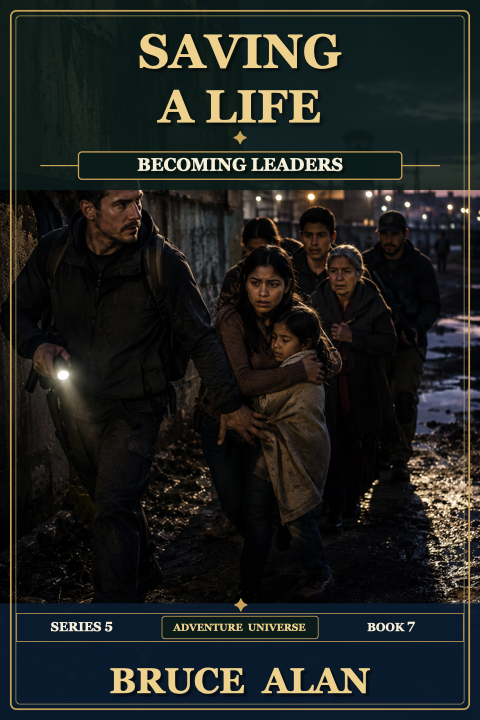
BOOK 7
Technology begins changing what the team can imagine. Digital storage, communications, specialized systems, and access to advanced tools allow information and coordination to move faster, but the story keeps returning to the human questions underneath the hardware.
Who understands the information? Who has permission to act? Who needs to know? And what happens when a useful tool reaches people before the surrounding procedures and safeguards are ready? Leadership increasingly means designing the system around the technology rather than treating the technology as the solution.
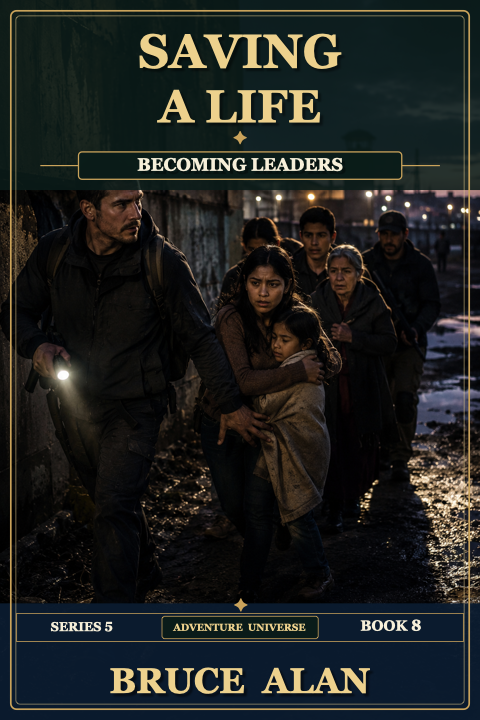
BOOK 8
Logistics and training move to the foreground. Aircraft, equipment, education, simulations, and specialists show how large operations are built from many smaller capabilities that have to work together reliably.
The characters also continue exploring schools, careers, cultures, and communities. The breadth is intentional: a strong network needs people who know different things, and leadership includes helping someone else find the place where their knowledge can matter.to the whole network that made it possible. The Adventure Universe is becoming something that can travel, adapt, and grow through regional leaders—setting the stage for the more demanding leadership challenges ahead.
BOOK 9
The story becomes more international as Indigenous partners, historical questions, time pressure, and growing operational demands converge. The team must rely more heavily on people who understand local communities and cannot be treated merely as extensions of the original Maryland group.
Coaching and preparation become as important as action. The characters are learning that a leader’s job is often to make someone else capable of succeeding rather than to remain the person at the center of every decision.
BOOK 10
Historical conflict becomes harder to categorize as the story examines competing narratives, armed groups, governments, civilians, and the difference between understanding why people act and excusing what they do. The characters are challenged to resist the comfort of a single “good side” explanation.
At the same time, the team itself is becoming more coordinated. Specialized roles, shared planning, and growing trust turn a collection of talented people into something closer to an organized humanitarian capability.
BOOK 11
The planned work moves from discussion into a more demanding phase. Characters who have been learning, organizing, and training are required to use those skills while depending on people and systems beyond their immediate circle.
Success creates new responsibilities rather than a clean ending. Helping one group of people raises questions about what happens next, who supports recovery, how resources are sustained, and how the network avoids making promises it cannot keep.
BOOK 12
Travel, training, and difficult encounters force the team to examine what leadership looks like when local history, culture, personal safety, and outside intervention collide. Tom’s time in Haiti pushes him to listen more carefully to the people around him, while events elsewhere show that capability without judgment can quickly become dangerous.
As the South American effort moves closer to action, planning becomes more distributed through regional contacts, clergy, communities, and specialists. The team learns that useful leadership depends on trust, restraint, and letting people closest to the problem shape the response.
BOOK 13
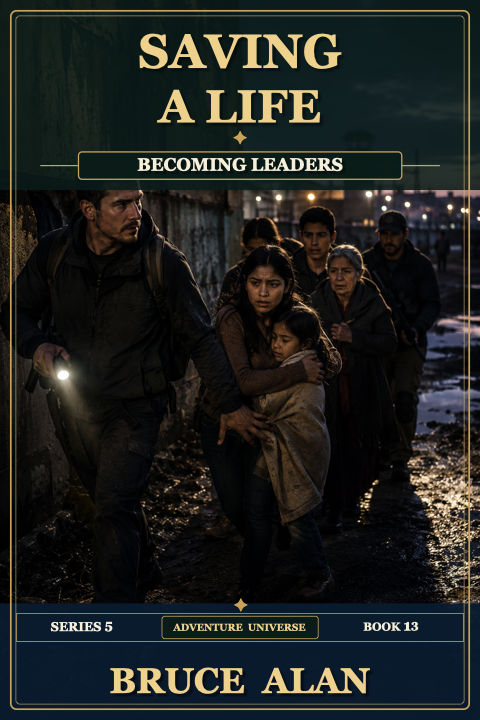
Firsthand stories of repression and survival move historical questions out of abstraction and into individual lives. As rescue operations expand, the team must confront the difference between helping people in theory and caring for thousands of real people with fear, needs, conflicts, and voices of their own.
At sea, leadership becomes visible in the contrast between prepared systems and improvised command. Tex steps into a leadership vacuum aboard Gonzalez’s ship, while Justin, JJ, and Janet question whether even well-intended intervention can cause harm. The lesson is no longer simply to act—it is to organize, listen, reassess, and share authority.
BOOK 14
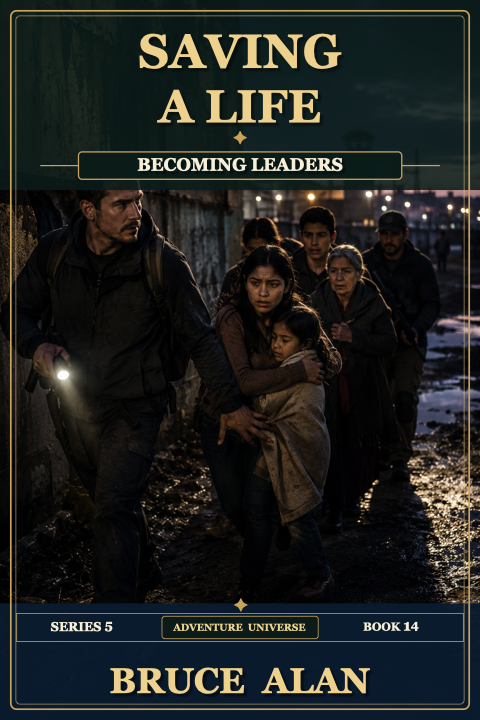
Relationships that began in friction start to change as Tex and Captain Gonzalez learn more about each other and the crew around them. Training, passenger care, and growing responsibilities show that leadership depends as much on trust and communication as on expertise.
At the same time, the network stretches across countries and communities. Local partners help track missing people and move information, while the traveling teams depend increasingly on language, maritime relationships, and people who understand the ground better than outsiders do. Cooperation becomes the force that keeps the larger effort moving.
BOOK 15
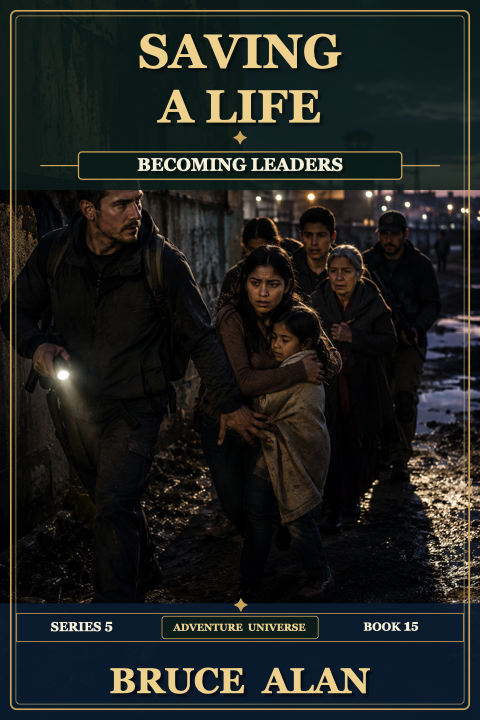
The final book pushes the network into its most dangerous and emotionally demanding stage. A pursued rescue ship faces an escalating military threat while the wider team confronts detention, disappearance, and the limits of what even a large humanitarian effort can accomplish.
The closing chapters bring rescue, reunion, grief, and reflection together. Families are reunited while other losses remain unresolved; field teams return carrying different experiences; and Justin is publicly recognized for leadership built through coordination rather than command. The series ends without pretending the larger problems are solved, but with a clearer understanding that responsible leadership means sharing credit, learning from consequences, and preserving the network for whatever comes next.